
Provisional Trust: Crypto-Agility in an Age of Quantum Uncertainty
Updated: Mar 25
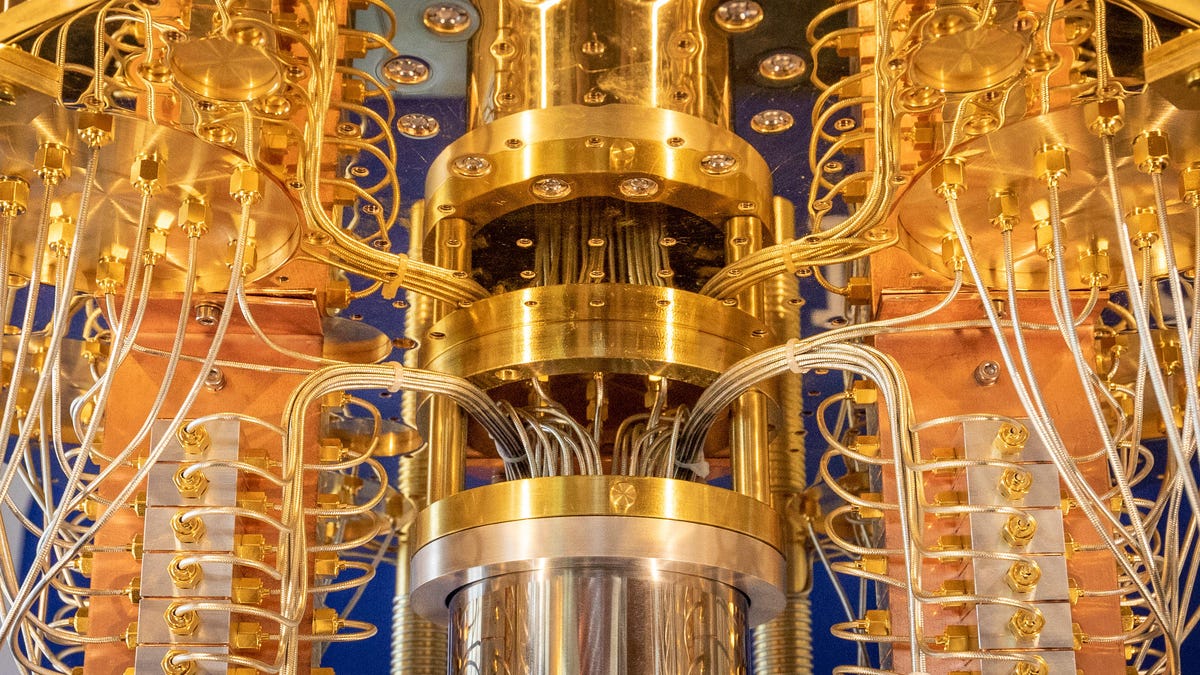
For decades, we operated under relatively stable assumptions. RSA and ECC were “good enough,” and the threat horizon for breaking them required either massive computational breakthroughs or exotic nation-state resources. Quantum computing changes that equation — not because it has already broken public-key cryptography at scale, but because it introduces structural uncertainty. Shor’s algorithm permanently altered our threat model for RSA and elliptic curve systems. PQC was born from that disruption. But the uncomfortable truth is that PQC itself rests on mathematical assumptions that are younger, less battle-tested, and more complex than the systems they replace.
Chen’s algorithm — even in its flawed form (although the bug found was addressed) — highlights a deeper strategic lesson: the lifetime of a cryptographic primitive is shrinking. Advances in mathematics, optimization, hardware acceleration, and hybrid classical-quantum techniques all contribute to an environment where today’s “hard problem” may become tomorrow’s research target. In a world of accelerating research cycles, global collaboration, and AI-assisted cryptanalysis, the durability window of cryptographic assumptions may compress further.
This has profound implications for cybersecurity strategy. Too many organizations still treat cryptography as a static dependency — embedded deep in infrastructure, firmware, identity systems, and third-party integrations. Historically, replacing a cryptographic algorithm has been painful, slow, and operationally risky. In the quantum era, that posture becomes dangerous. If we assume that this year’s quantum-resistant algorithm could be materially weakened next year, then resilience depends less on picking the “perfect” algorithm and more on building systems that can change algorithms safely and quickly.
This is the case for crypto-agility.
Crypto-agility is not merely the ability to toggle between cipher suites in TLS. It is architectural: abstraction layers that decouple applications from specific primitives; centralized cryptographic policy management; inventory visibility across keys, certificates, and dependencies; automated certificate lifecycle management; firmware update pathways; and governance processes that treat cryptography as a living control plane. It also requires disciplined key management, strong cryptographic libraries, and elimination of hard-coded primitives buried in legacy code.
For large financial institutions, cloud providers, and critical infrastructure operators, this is not theoretical. “Harvest now, decrypt later” attacks mean that sensitive data captured today could be vulnerable when future cryptanalytic advances arrive. The cost of standing still is asymmetric: attackers only need one breakthrough; defenders must survive them all.

The transition to PQC is therefore not a one-time migration project. It is the beginning of a new operational model for cryptography — one that assumes impermanence. We must normalize the expectation that algorithms will age out faster. We must design infrastructure with swap-ability in mind. And we must embed continuous cryptographic risk assessment into enterprise governance.
Chen’s algorithm did not break lattice cryptography. But it did something more valuable: it reminded us that the ground beneath cryptography is never fixed. In a quantum world, long-term security will belong not to those who choose the “right” algorithm once, but to those who build systems prepared to evolve.


Comments